
This post is not sponsored by WordPress.
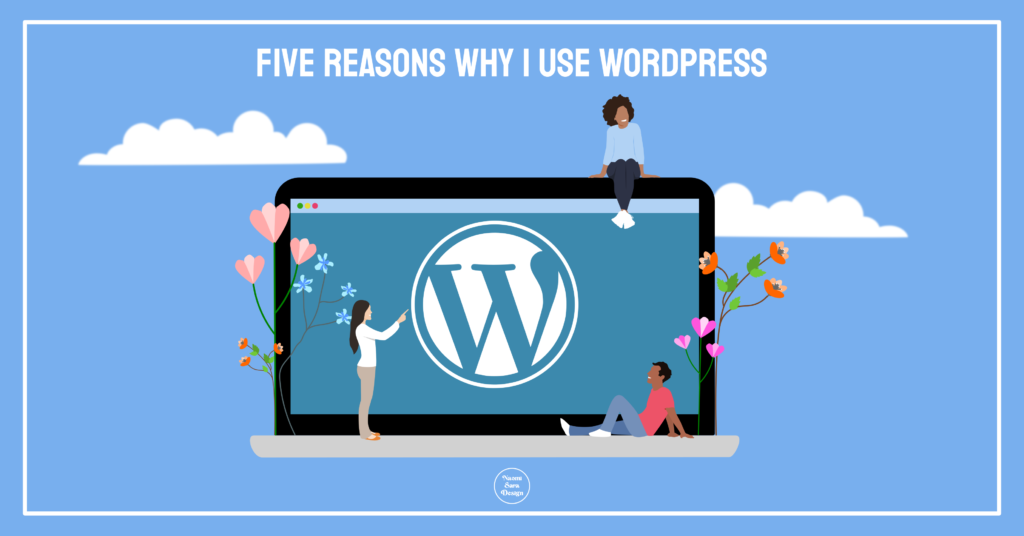
WordPress has been considered the standard in blogging and content management systems for over two decades. But with new website platforms emerging every year, is it still worth checking out?
Consider this, as of 2026, WordPress powers over 43% of all websites on the internet. If that doesn’t sound like a high ratio, consider the fact that over one billion websites exist in the world today. WordPress supports nearly 600 million websites despite being a platform that emerged in 2003 and new competitors popping up on the market each year. Need more reasons to be convinced? Keep reading.
A Quick Clarification Before We Dive In.
Before we get started, it is important to note that there are two different versions of WordPress: WordPress.org and WordPress.com.
- WordPress.org is an open-source software project available to users.
- WordPress.com is a commercial hosting company which provides a managed service to users.
For the purpose of this blog post, I will be addressing WordPress.org as it offers all of the full flexibility and perks mentioned below that made it so popular.
1. Flexibility and Scalability
WordPress adapts to you and your needs. Need a simple, static website to get started with your brand or business? You got it.
Your business has taken off and now you need a website platform that can handle a higher volume of content? You can still manage all of these things without the need to switch platforms.
2. Full Ownership
Speaking of switching, sometimes the need to switch hosting providers arises.
Think of your hosting provider as a landlord, the company rents you space for your website on the internet. This company keeps all of your website information on a server and fetches this information for users whenever they try to access your website from anywhere in the world. Well known examples of hosting providers include Bluehost, GoDaddy and Hostinger, to name a few.
Maybe, the hosting provider you started out with just isn’t cutting it anymore and another provider is offering features your current one just isn’t.
With most modern website builders and platforms, you’re free to leave should that issue arise, but you’re likely going to need to leave your website behind.
That’s right. You can’t take it with you because you don’t own it, the website platform does. So wherever you go next, you must start all over again.
That’s not to say that the process is impossible. You can take some things with you, but it’s not a simple “one-click” process.
For some simple websites, this might be fine. But imagine pouring time and resources into a website, only to find out that it’s tied to the platform you built it on. Meanwhile, switching hosting providers whilst utilising WordPress is the complete opposite because you have complete ownership and data portability. This means that you’re able to switch to another hosting provider whenever you want without having to sacrifice the website you worked so hard on.
This was a major selling point for me as I didn’t want to feel locked in with a hosting provider before being sure of how much time I’d be sharing with the platform and how much growth my website would achieve over time. I wanted the flexibility that I knew ownership would provide me.
The kicker? Just make sure that you’re utilising WordPress.org as this is the self-hosted, open-source software. It requires you to purchase a separate domain and hosting but you’re able to use it with any hosting provider you choose.
WordPress.com is a hosting provider and website platform built into one. While leaving is easier than on other website platforms, WordPress.org is the better option for this purpose.
3. Custom Features and Plugins
While many website platforms, including WordPress, usually supply themes and templates that can provide your website with a good foundation, you may find that, especially as your website grows, you need access to more features.
WordPress has a wide database of plugins which are coded add-ons to your website that cater towards specific needs. This makes your website entirely customisable and gives it the opportunity to be completely unique.
4. Cost Effective
WordPress remains one of the most affordable options on the market. Why? Because it’s free.
WordPress.org is a free open-source software. This means that you don’t need to pay to access it, install it or utilise its features to build and manage your website.
Owning any website comes with a minimum requirement to purchase a domain, also known as the address users search to find you, for example, www.mywebsite.com, and a hosting provider such as Hostinger or GoDaddy which serves users your website information via their server when they click on your domain.
But WordPress itself does not come with an extra charge. Considering that it is one of the most enduring content managing systems on the market, with all of the benefits mentioned previously, I’d say that’s a pretty sweet deal.
5. Versatility
One of the great things about WordPress is that it is extremely versatile and adapts to your website’s needs.
Does your website need to be fully dynamic instead of simple and static? Do you need a blog or an e-commerce platform? Do you need to book appointments or manage subscriptions through your website? You can do all of these things and much more.
When I first started building my website on WordPress over a year ago, I didn’t plan on hosting a blog or managing an e-commerce service via my online shop, but I’m grateful that I’ve been able to do it all in one place since creating those additions to my platform. It’s certainly made expansion much easier.
So there you have it. Five reasons why I use WordPress and why you should consider doing so too. It’s an affordable, flexible option that gives you the opportunity to be unique, versatile and claim ownership over your work. If you’re just starting out with your brand or business, or you’re looking for a platform that can provide you with these benefits, I’d say WordPress (specifically WordPress.org) is the way to go.
Bookmark this post for later or share it with someone who’s weighing their website platform options right now, and I’ll catch you in the next one!
Until then,
Naomi